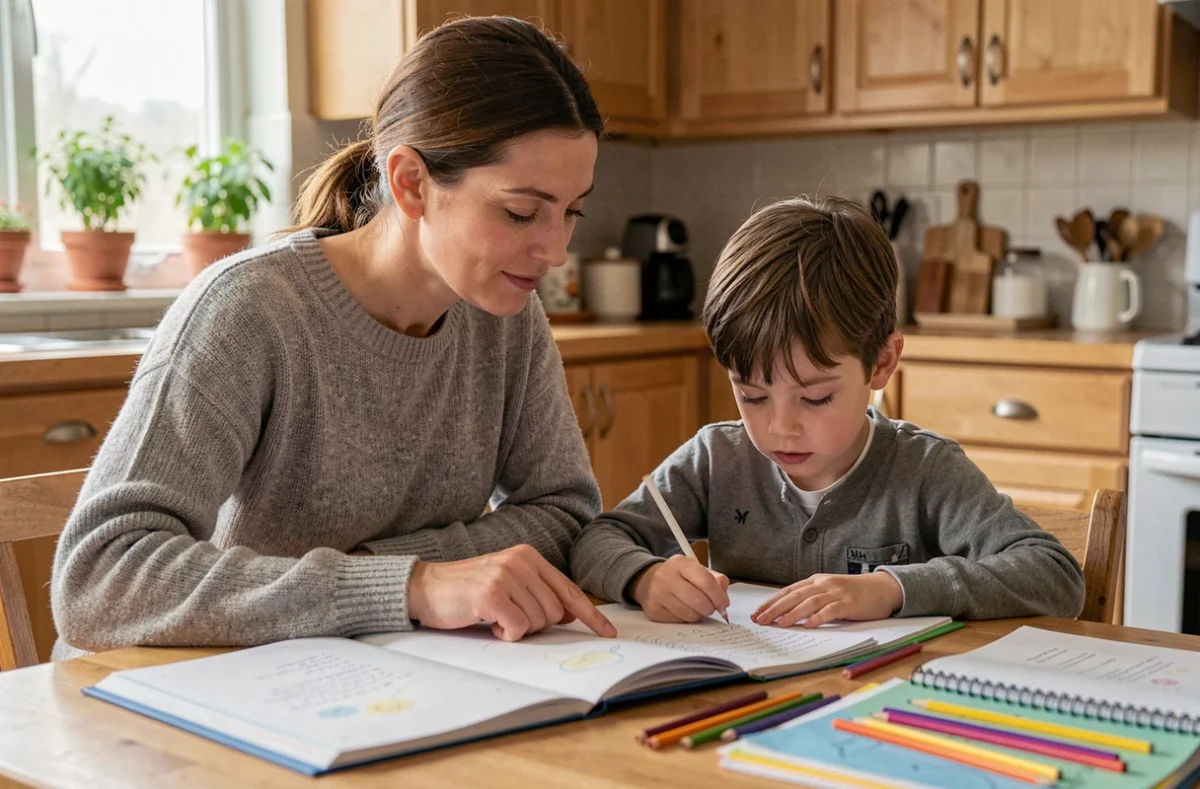
The share of French students whose parents discuss what they do in class each week has decreased from 74% in 2022 to 63% in 2025 according to PISA 2025 data. Regular discussions about academic difficulties have dropped from 48% to 34% over the same period.
These declines affect all social backgrounds and are accompanied by a reported increase in concentration and organization issues among students. What concrete levers remain available to parents to support their child’s learning?
Decrease in parental involvement: what PISA 2025 data measures
The decline is not limited to discussions. PISA 2025 points out a correlation between the frequency of parent-child exchanges about school and students’ ability to ask for help when facing difficulties. When weekly conversations disappear, the child loses a regulatory channel that helps them verbalize their blockages.
| PISA Indicator | 2022 | 2025 | Difference |
|---|---|---|---|
| Parents discussing class each week | 74% | 63% | -11 points |
| Regular discussions about academic difficulties | 48% | 34% | -14 points |
The most significant gap concerns discussions about difficulties (-14 points). This means that only one-third of parents regularly address the obstacles encountered in class. Several factors contribute to this: mental load, fatigue, and the increasing number of digital distractions after school.
As detailed in the article provided by Parents en Action, the quality of these exchange moments matters more than their duration. Five minutes of targeted conversation about a specific exercise have a greater effect than half an hour of passive homework supervision.
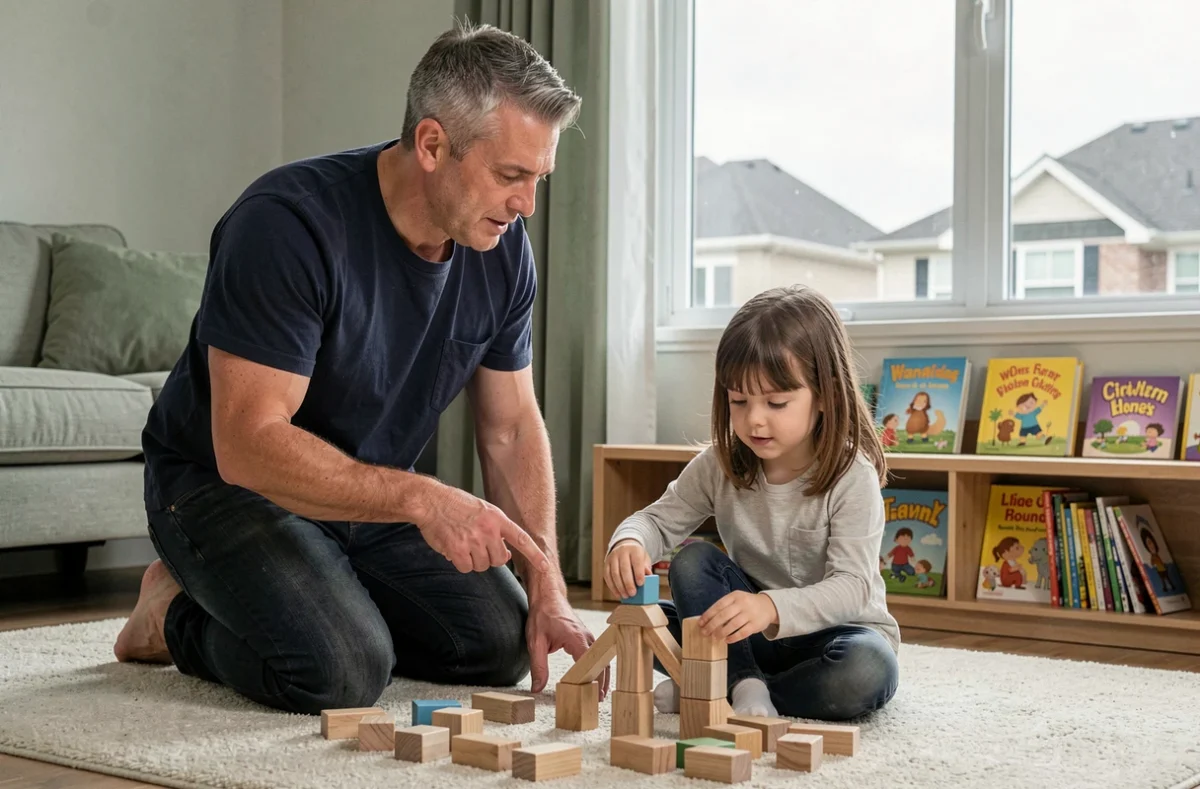
Screen time and learning: the framework set by the Studer law
Law No. 2022-300 of March 2, 2022 (Studer law) and its implementing decree impose a pre-installed parental control system on devices sold in France. This obligation redefines screen management in daily learning, but activation remains in the hands of parents.
The problem is not the screen itself. A reading exercise on a tablet, a documentary video, or an interactive quiz can enhance learning. However, the unmonitored transition from educational content to entertainment streams fragments attention.
Differentiating active use and passive use
Active use (responding to an exercise, searching for information, creating a document) engages working memory. Passive use (scrolling, watching short videos) puts it on standby. The difference lies in the intention: does the child know what they are looking for before turning on the screen?
- Set a specific goal before each digital session (review a lesson, watch an identified video capsule, complete an online exercise)
- Activate parental controls to block the switch to entertainment apps during work time
- Limit the educational screen session to a pre-defined duration, with a timer visible to the child
This structuring does not require special equipment. It relies on a simple rule: the screen serves a defined learning objective, not a default occupation.
Learning channels and parental adaptation in daily life
Each child processes information differently depending on whether they favor the visual, auditory, or kinesthetic channel. Identifying this preference changes how a parent supports a lesson or exercise.
Identifying the dominant channel
A child who retains information better by reading silently and highlighting relies on the visual. One who memorizes by repeating aloud or listening to an oral explanation favors the auditory. The child who needs to manipulate, write, or move to understand uses the kinesthetic channel.
Observing how the child spontaneously recalls information provides a reliable clue. If they draw a diagram to explain, the visual dominates. If they recount in detail what the teacher said, the auditory prevails.
Adapting the support without complicating
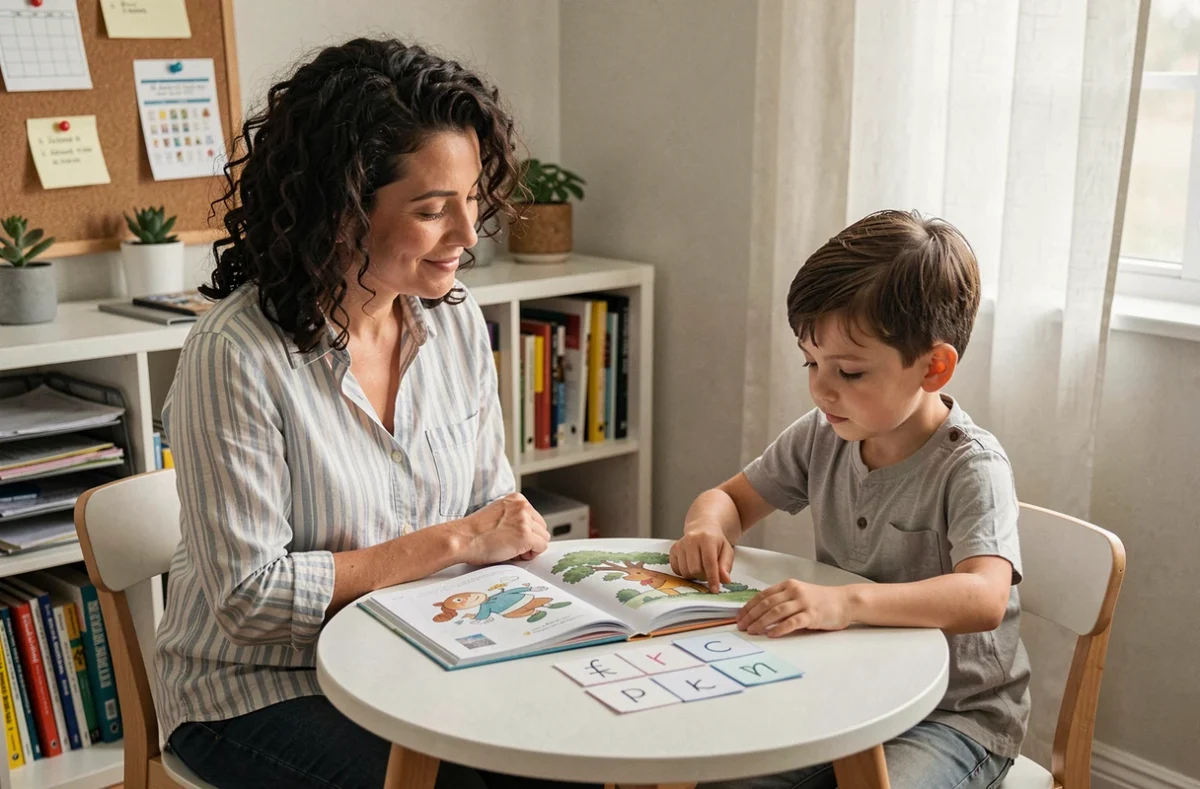
Adaptation does not require transforming the homework. For a visual profile, mind maps or color codes on keywords are sufficient. For an auditory profile, reading the lesson together aloud and then rephrasing it changes the game. For a kinesthetic profile, writing vocabulary words on manipulable cards turns recitation into a sorting game.
The trap would be to try to engage all three channels in every session. Focusing on the child’s preferred channel reduces cognitive load and shortens work time.
Breaks and work rhythm: calibrating sessions according to age
The ability to concentrate varies greatly with age. A six-year-old does not maintain attention in the same way as a middle school student. Applying a single session duration to all ages generates fatigue and resistance.
- In preschool and early elementary, work sequences of a few minutes interspersed with active breaks (stretching, short free play) maintain engagement
- In late elementary, longer blocks are possible as long as tasks are broken down: alternating reading, writing, and oral exercises
- In middle school, the break between subjects allows for a reset of attention, provided it does not switch to an entertainment screen
The most reliable stop signal remains the child’s behavior. When they start to fidget, reread the same line three times, or respond mechanically, a break is necessary, even if the exercise is not finished. Resuming after a short break yields better results than forcing the end of a task.
The 14-point drop measured by PISA 2025 in discussions about academic difficulties reflects a daily life where time is scarce and screens capture the attention of the whole family. The levers remain accessible: targeted conversation, screen used with a specific goal, support adapted to the learning channel, sessions calibrated to the actual concentration capacity.
None of these actions require any particular pedagogical skill.