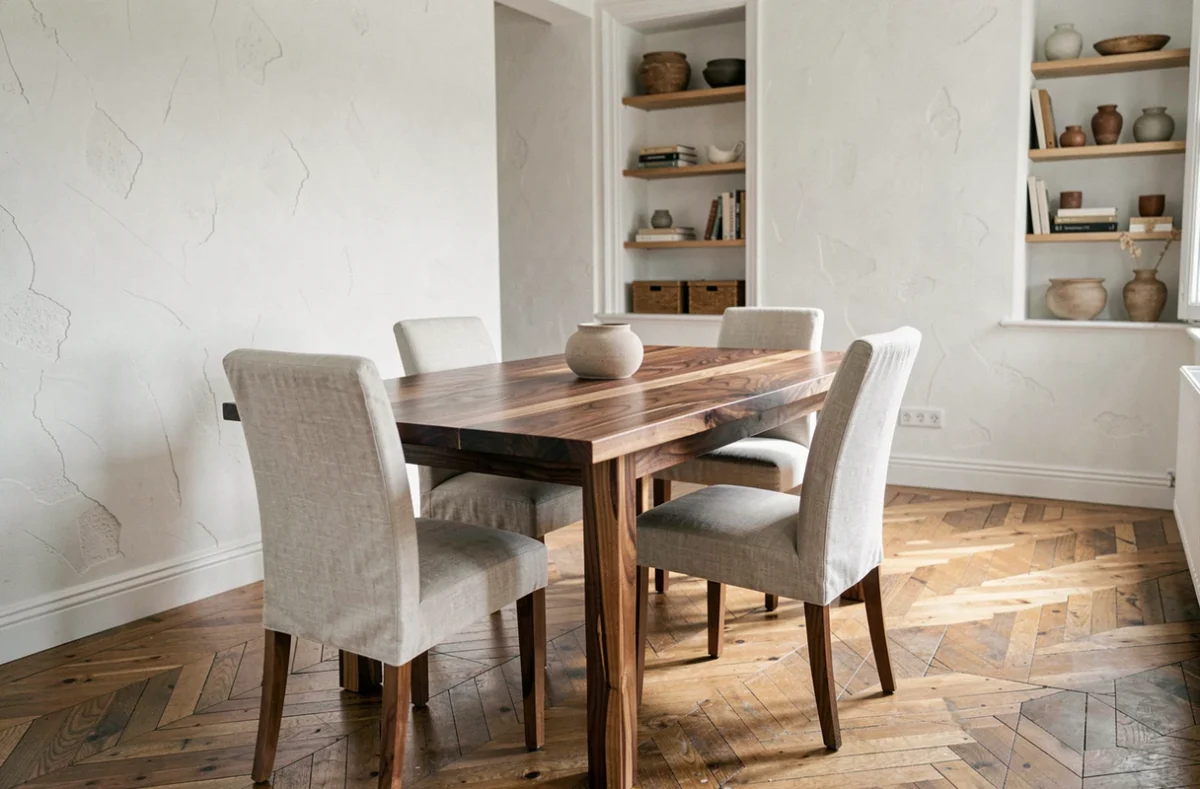
Solid walnut occupies a special place in high-end furniture. A noble wood par excellence, it appeals to both interior designers and individuals looking for a piece that will last through the decades. Its natural hue, ranging from chocolate brown to lighter golden reflections, gives it a visual presence that few species can claim.
The solid wood furniture market is experiencing a resurgence of interest, driven by a growing demand for durable and traceable pieces. The European regulation against deforestation (EUDR) now imposes due diligence obligations on operators, prompting manufacturers and retailers to document the origin of their woods. In this context, solid walnut sits at the intersection of two expectations: the aesthetics of a living material and transparency about its provenance.
Solid walnut and wood movement: what the product sheet doesn’t say
A solid walnut piece is not a static object. Like all wood, walnut reacts to variations in ambient humidity. In winter, when heating dries the indoor air, the wood may slightly shrink. Conversely, a damp room will cause it to swell.
This seasonal movement puts stress on the joints. A poorly designed tabletop, where the wood cannot “work” freely, will eventually warp or crack. Therefore, the quality of a walnut piece depends not only on the chosen species: the design of the joints determines the longevity of the furniture.
Before purchasing, it is relevant to check if the manufacturer has provided attachment systems that allow for the natural contraction of the wood. A serious cabinetmaker will mention this spontaneously. A retailer who is unaware of the issue deserves concern.
In this regard, the solid walnut furniture at Atypik Home illustrates an approach where the choice of material is accompanied by work on the structure of the furniture, not just its appearance.
Walnut color and UV aging: anticipating color evolution
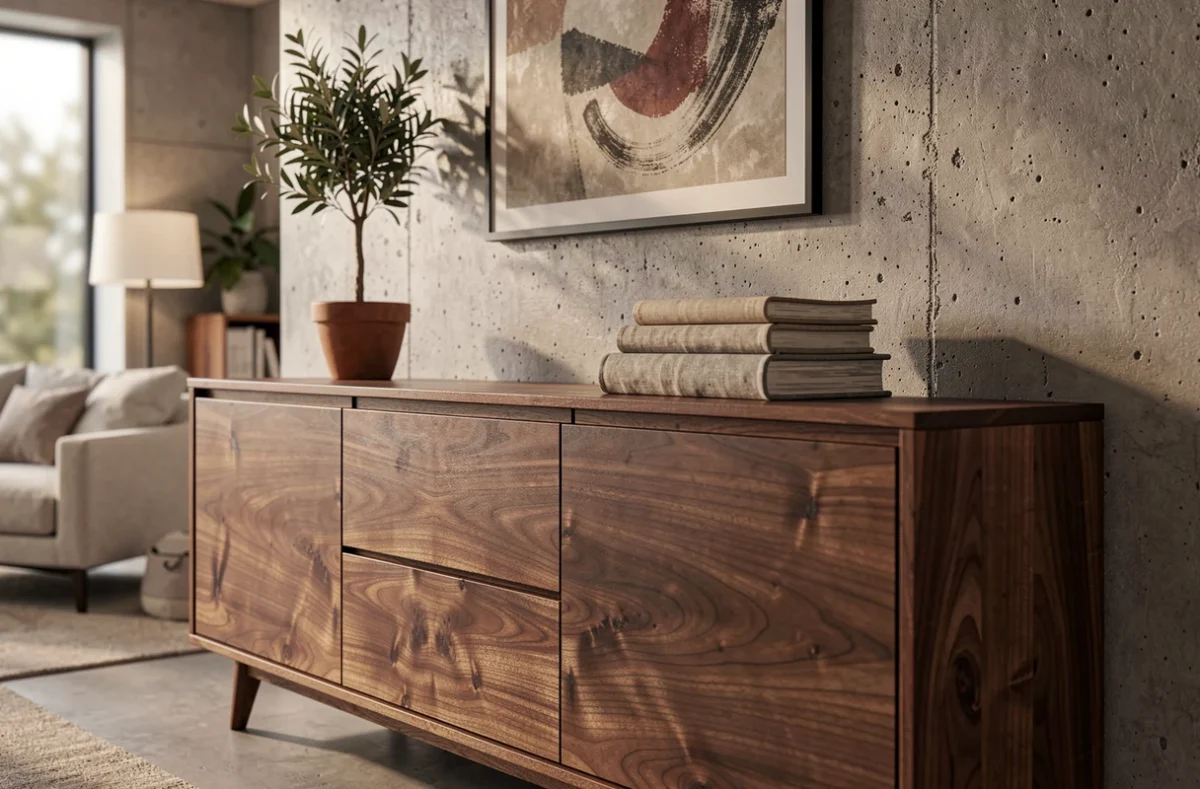
The color of walnut is often the primary selling point. This palette of deep browns, sometimes veined with lighter shades, gives the furniture an immediate warmth. However, this hue is not static.
Exposure to UV light gradually alters the appearance of walnut. A table placed near a window will see its surface evolve differently depending on the areas exposed to direct sunlight. If a decorative object remains in the same spot for months, it will leave a darker imprint underneath, while the rest of the tabletop will lighten or change tone.
Two simple precautions limit these contrasts:
- Avoid prolonged direct sunlight by using filtering curtains or by orienting the furniture differently according to the seasons.
- Regularly move objects placed on the surface (vases, coasters, books) to ensure even aging.
- Also accept that this natural patina is part of the character of solid walnut. A piece that ages uniformly gains depth over the years.
This aging distinguishes solid walnut from veneers or walnut-effect laminates, which do not develop any patina and eventually appear dated.
Walnut furniture finish: the criterion often overlooked in stores
In showrooms or on furniture websites, the focus is often on form, color, and proportions. The finish applied to the wood often takes a back seat. This is a mistake.
An oiled finish warms the color of walnut and enhances the depth of the grain. It provides a more natural, almost satin-like touch. In return, it requires regular maintenance: one to two applications of oil per year depending on usage.
Other finishes (matte varnish, hard wax) better preserve the original hue and provide better protection against everyday stains. The compromise lies between the desired visual effect and the acceptable level of maintenance.
The question to ask the seller is simple: what finish has been applied, and how can it be retouched by oneself? A transparent manufacturer will provide a precise care sheet. The choice of finish influences both the appearance and the durability of the furniture in the long term.
Walnut traceability: a buying criterion beyond aesthetics
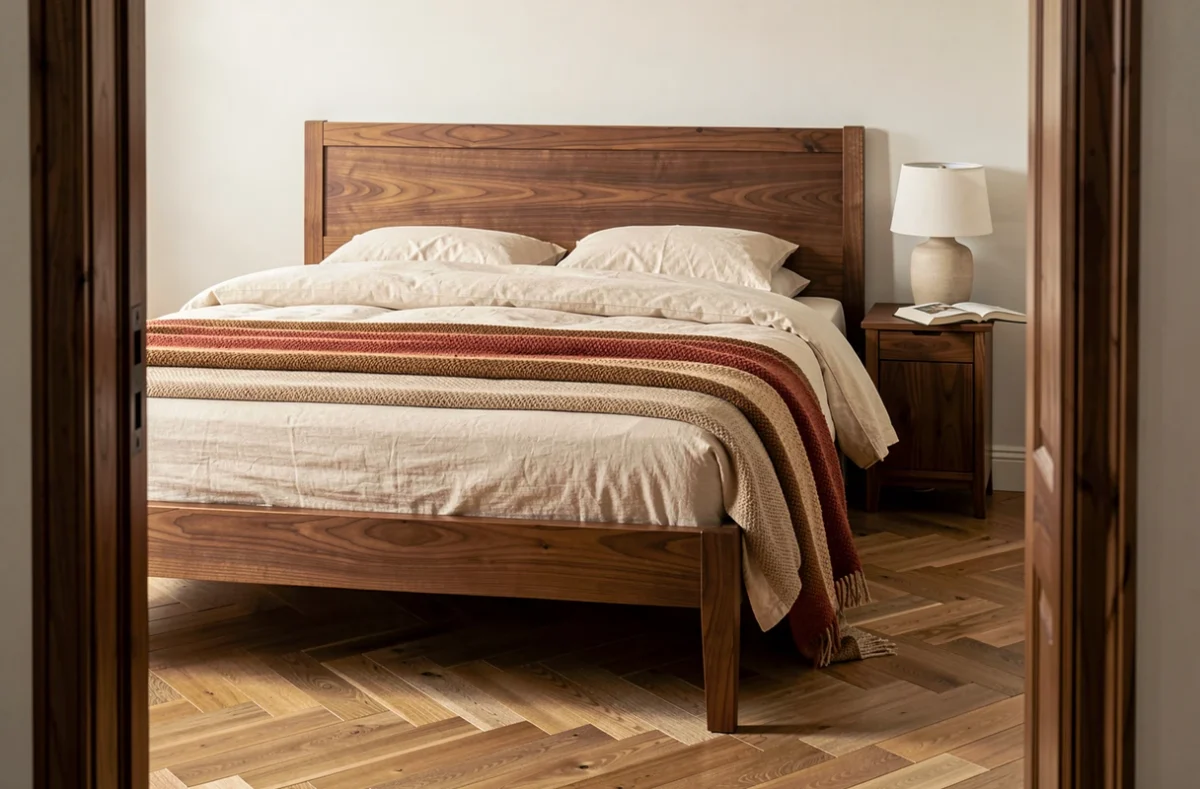
The walnut used in cabinetry mainly comes from two sources: European walnut (Juglans regia) and American walnut (Juglans nigra), which is darker. The origin of the wood affects the hue, hardness, and final price of the furniture.
With the implementation of the European regulation against deforestation, operators must prove that the wood marketed does not come from deforestation. This regulatory framework (EUDR) provides for document conservation and traceability obligations throughout the supply chain.
For the buyer, this means it is now legitimate to ask for the precise origin of the wood. A manufacturer or retailer unable to answer this question is out of step with current regulatory requirements.
What traceability concretely changes
Traceability alone does not guarantee the quality of the furniture. A perfectly traceable walnut piece can be poorly assembled or poorly finished. However, it provides insight into the manufacturer’s practices: an artisan who documents the origin of their wood generally pays the same attention to the rest of their production.
- Ask if the wood is certified (FSC, PEFC) or if the manufacturer has due diligence documents under the EUDR.
- Check if the geographical origin of the walnut is mentioned on the product sheet or invoice.
- Compare: a solid walnut piece with an unclear origin, sold at an abnormally low price, should raise questions.
A traceable solid walnut piece protects both the buyer and the forests. This is a criterion that does not appear in decoration catalogs but weighs heavily in the actual durability of the purchase.
Solid walnut remains a demanding material that requires attention to what happens beneath the surface: joints, finish, wood origin. These three parameters, rarely highlighted in sales pages, make the difference between a piece that will last a generation and one that will disappoint after a few years.