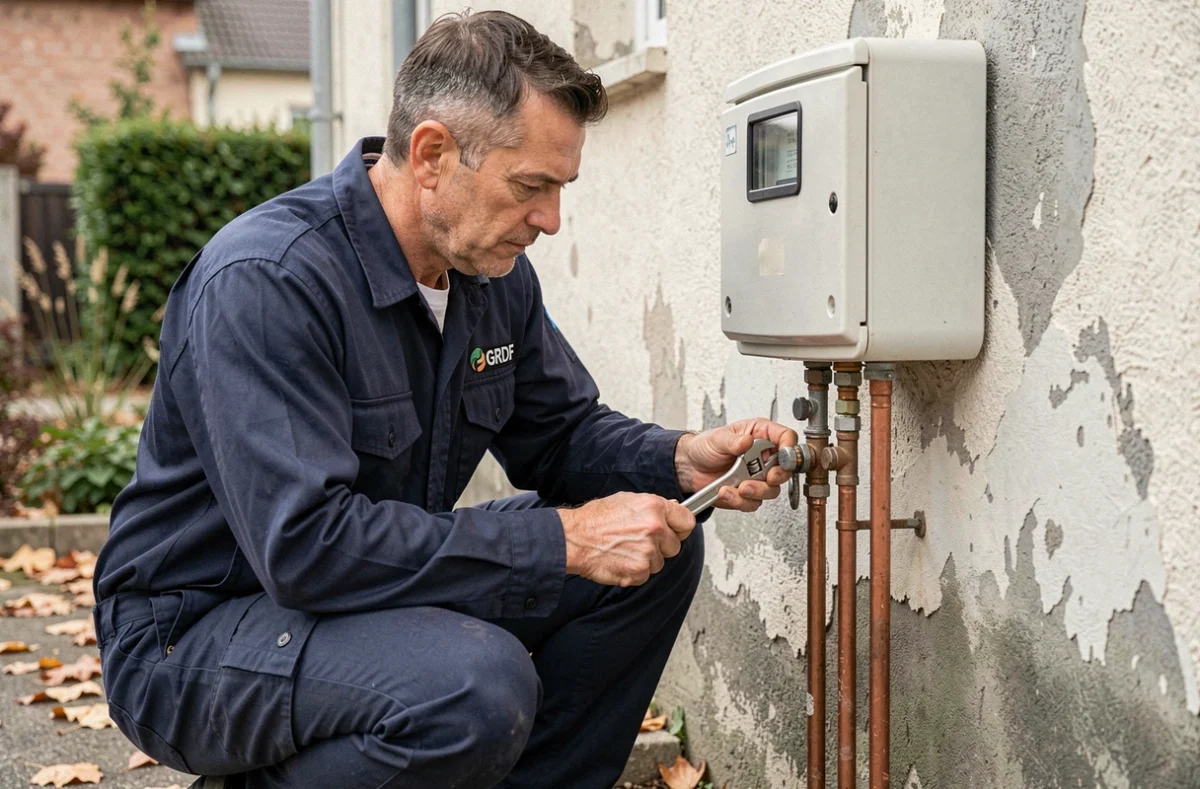
The connection to the city gas refers to all the work that physically links a home to the public natural gas distribution network. This operation, managed by GRDF as the network operator in most of the territory, includes the installation of a pipeline between the public pipeline and the meter installed at the property boundary or inside the building.
Renewable gas in the network: what biomethane changes for a connection
Connecting to the natural gas network no longer means consuming only fossil gas. GRDF now publishes a monthly dataset measuring, by department, the ratio between local production of renewable gas and local consumption. This data reflects the growing share of biomethane injected into the pipelines.
Specifically, biomethane produced by agricultural or industrial methanation units uses the same network as conventional gas. A connected home therefore receives a mixture whose renewable component varies according to the geographical area. Some departments show significant local coverage, while others remain marginal.
This evolution has a direct impact on energy choice. An individual hesitating between an electric heat pump and a gas boiler can incorporate this territorial indicator into their consideration. Before making a request, consulting GRDF’s open data allows one to locate their department and assess the environmental relevance of a connection to city gas with GRDF in light of local biomethane production.

Certificate of compliance and NF DTU 61.1 standard: two technical locks to anticipate
The connection is not limited to laying a pipeline. Two technical requirements condition the commissioning of the gas meter: the compliance of the internal installation and adherence to the standard governing the piping.
NF DTU 61.1 standard and choice of materials
The NF DTU 61.1 standard sets the design and installation rules for domestic gas systems. It mandates the exclusive use of certain materials for internal pipelines:
- Copper, widely used, suitable for visible or embedded layouts in walls
- Steel, used in configurations requiring superior mechanical strength
- PLT (flexible corrugated stainless steel pipe), more flexible, facilitating complex passages
- Polyethylene, reserved for buried sections outside the building
Replacing an old lead pipe is not mandatory as long as it remains intact. Any modification or extension of the layout requires switching to one of the authorized materials.
Qualigaz Certificate: the necessary step before gas commissioning
Once the internal installation is completed, an approved organization (Qualigaz being the most common) issues a gas compliance certificate. Without this document, GRDF refuses to proceed with the commissioning. The inspection focuses on compliance with the standard, the tightness of the connections, the ventilation of the premises, and the distance of the pipelines from other networks.
Having the installation carried out by a qualified PG (Gas Professional) reduces the risk of non-compliance and avoids a second visit from the inspector, which incurs additional costs and extends the timeline.
Organization of the connection site: the often underestimated time factor
Online guides extensively detail the administrative steps (online request, receipt of the quote, signature). The least documented aspect remains the concrete organization of the site, which nevertheless impacts the comfort of the occupants.
For an already occupied home, coordination with GRDF deserves particular attention. A feedback published by GRDF describes the connection of a restaurant complex in Narbonne, carried out entirely at night to avoid interrupting kitchen operations. The resumption was possible the very next morning.
This case illustrates a principle applicable to individuals: the intervention schedule and hours are negotiated in advance with the technical contact at GRDF. An occupied home with constraints (remote work, young children, restricted access at certain times) can be accommodated if the request is made before signing the connection contract.
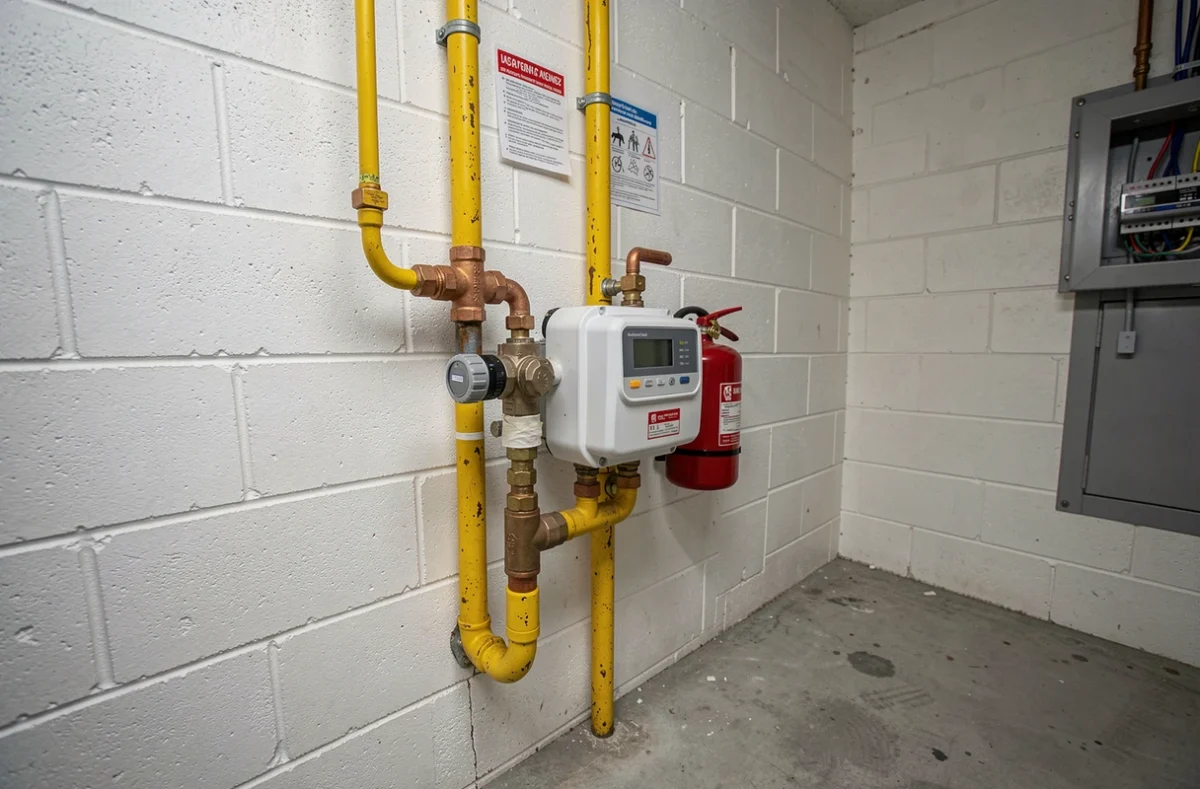
Typical sequence between request and commissioning
The process follows a precise sequence, with each step conditioning the next:
- The project study by GRDF, which results in a commercial proposal valid for six months
- The actual connection work (installation of the pipeline between the public network and the meter)
- The execution of the internal installation by a PG professional, followed by the compliance check
- The assignment of a PCE (Point of Metering and Estimation) to the home, necessary to subscribe to a contract with the chosen gas supplier
Overall timelines vary depending on the complexity of the site and the distance between the existing network and the home. Anticipating the request several weeks before the desired commissioning date remains the most effective precaution.
Gas supplier and distribution contract: two distinct relationships
A common confusion is mixing the role of GRDF and that of the supplier. GRDF manages the physical network: installation of the meter, maintenance of public pipelines, technical intervention. The gas supplier (Engie, TotalEnergies, Ekwateur, or any other market player) handles the sale of energy and billing.
After the connection and obtaining the compliance certificate, the individual contacts the supplier of their choice to open a contract. This supplier then forwards the request for commissioning to GRDF, which proceeds with the meter opening. Confusing these two contacts prolongs the timelines: a connection request sent to a supplier will be redirected to GRDF, adding an unnecessary intermediary.
The choice of supplier has no impact on the quality of the connection or the gas pressure delivered. The difference lies solely in the price per kilowatt-hour, tariff options, and customer service. Comparing offers after securing the technical aspect with GRDF allows for separating the two decisions without delaying the project.