A muscle cramp involves an involuntary and sustained contraction of the muscle, with a peak of pain that makes any movement difficult for several seconds. Adopting the right position at the right time shortens the duration of the contraction and limits damage to the muscle fibers. Here we detail six targeted positions according to the affected muscle group, along with the physiological mechanisms that make them effective.
Excessive stretching of the calf against a wall: the first-line reflex
During a cramp of the triceps surae, the contraction mainly affects the gastrocnemius. The most effective position is to place the hands flat against a wall, with the cramping leg behind, knee straight, heel firmly pressed to the ground. The front foot remains flexed, knee slightly bent.
The goal is to induce an eccentric stretch of the gastrocnemius to activate the autogenic inhibition reflex via the Golgi tendon organs. This reflex forces the relaxation of the contracted muscle. Maintaining the position for at least twenty seconds without bouncing allows the neuromuscular spindle to recalibrate.
Practitioners following Tsa E-Santé’s health advice will find this principle of eccentric load stretching applied to several muscle groups.
A common trap: bending the back knee during the maneuver. This transfers tension to the soleus and reduces the effect on the gastrocnemius, which is often the main muscle involved in calf cramps.
Active dorsiflexion of the foot for plantar cramps and toes
Cramping of the arch of the foot or toe flexors does not respond well to simple massage. The position to adopt: sitting, grasp the toes and pull them firmly towards the tibia while keeping the knee extended. The movement of active dorsiflexion of the foot places the intrinsic plantar muscles in maximal external range.
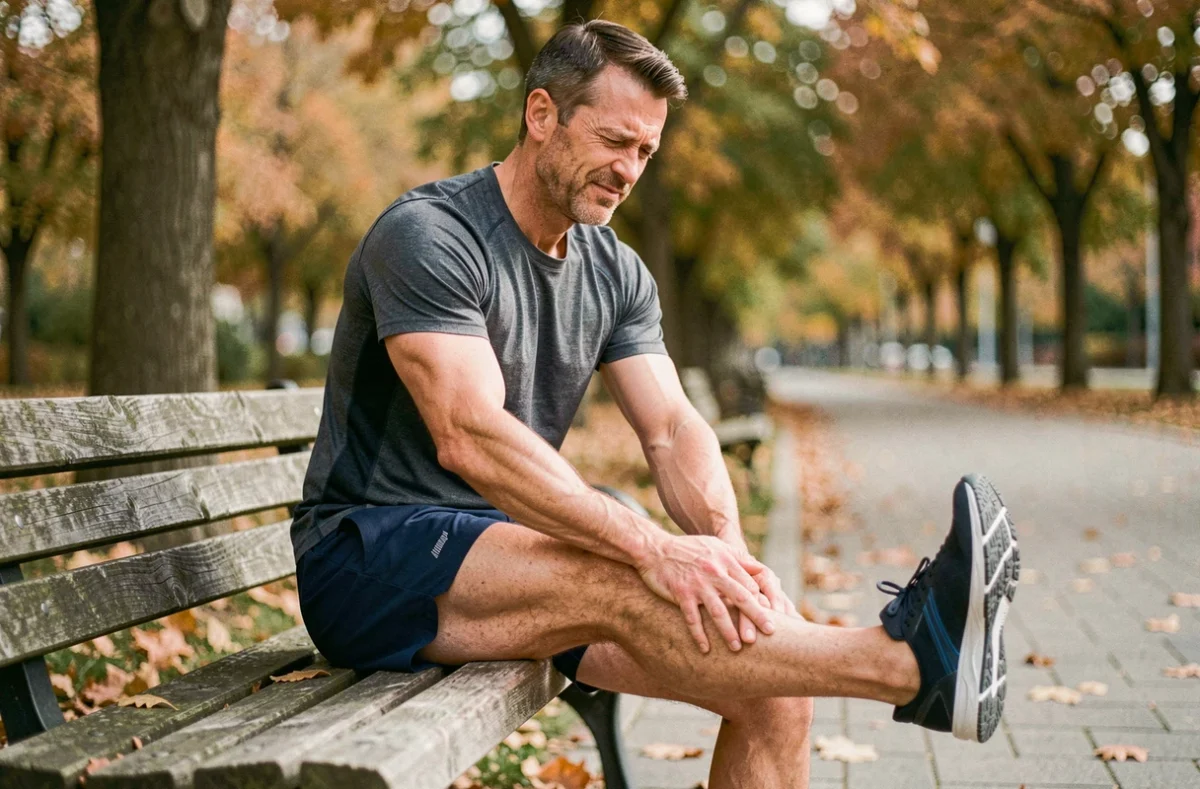
If the cramp specifically affects the big toe, applying direct pressure under the first metatarsal head while pulling the hallux into extension speeds up resolution. This dual mechanical action targets the short flexor of the hallux, often responsible for nocturnal plantar cramps.
Quadriceps extension position in lateral decubitus
The quadriceps cramp (front of the thigh) is particularly severe. Standing and grabbing the ankle behind, like a classic stretch, works but poses a balance problem when the pain is intense.
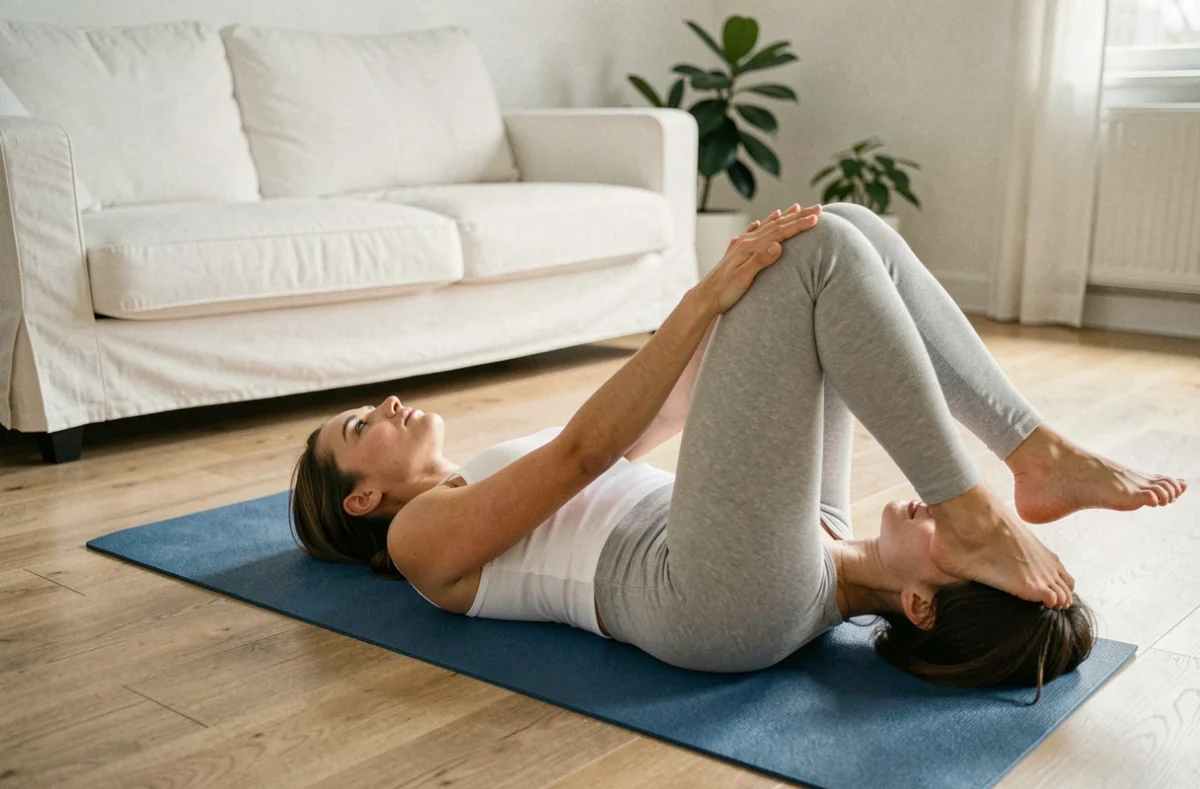
We recommend lateral decubitus: lying on the side opposite to the cramp, grasp the ankle of the affected limb and pull the heel towards the buttock. The pelvis remains neutral, without anterior pelvic tilt. The knee must remain aligned with the hip or slightly behind to ensure the stretch of the rectus femoris, the only bi-articular head of the quadriceps.
This position eliminates the risk of falling and allows for maintaining the stretch longer without lumbar compensation. In case of a nocturnal cramp, it can be taken directly from the lying position, without delay.
Hamstring cramps: trunk flexion on extended leg
The hamstrings often cramp during internal running, typically during a sprint or a sudden concentric effort. The relief position is simple: sitting on the ground, affected leg extended in front, lean forward keeping the back flat, hands sliding along the tibia.
Locking the knee in full extension is non-negotiable. Even a slight flexion of the knee removes tension from the hamstrings and makes the position ineffective. The foot is in a neutral position, neither in plantar flexion nor in forced dorsiflexion, to avoid recruiting the already weakened triceps surae.
Intercostal and diaphragm cramps: thoracic release position
Diaphragm or intercostal cramps are under-documented in the popular literature. The persistent “side stitch” that turns into a contracture often relates to a spasm of the diaphragm.
The most effective position is to raise the arm on the affected side above the head, then lean the trunk to the opposite side. This lateral inclination opens the intercostal space and stretches the fibers of the diaphragm in an eccentric position. Combining a slow and prolonged exhalation (inspiratory/expiratory ratio of one to three) enhances relaxation by stimulating parasympathetic tone.
For isolated intercostal cramps, rotating the trunk to the opposite side of the spasm, while keeping the pelvis fixed, specifically targets the external intercostal muscles.
Cervical cramps and upper trapezius: controlled inclination with shoulder fixation
A cramp of the upper trapezius or scalene muscles blocks cervical rotation and radiates to the shoulder. Grasp the edge of the chair (or bed frame) with the hand on the cramping side to fix the shoulder, then slowly tilt the head to the opposite side, ear towards the shoulder.
Fixing the shoulder down prevents compensation by scapular elevation, a protective reflex that reduces the actual stretch amplitude of the trapezius. Maintain the position with calm breathing. If the cramp affects the scalene muscles, adding a slight rotation of the head upwards (looking towards the ceiling on the opposite side) increases the specificity of the stretch.
Common points to watch for in all these positions
- Each stretch should be held for a minimum of fifteen to twenty seconds to trigger the autogenic inhibition reflex, unlike rapid mobilizations that risk worsening the spasm.
- Slow breathing (prolonged exhalation) lowers overall muscle tone through vagal activation and facilitates the relaxation of the contracted muscle.
- If cramps occur after the introduction or modification of a medication (diuretics, statins, antihypertensives), this pattern should be reported to a healthcare professional, as noted by the Mayo Clinic.
- A 2020 Cochrane review concludes that magnesium supplementation provides little clinically significant benefit in preventing ordinary cramps in older adults, reinforcing the interest in the positional approaches described here.
The positions described target the main mechanism of the cramp: an involuntary shortening that only a sustained stretch can interrupt. Adapting the position to the affected muscle makes the difference between relief in a few seconds and residual pain that persists for several minutes.