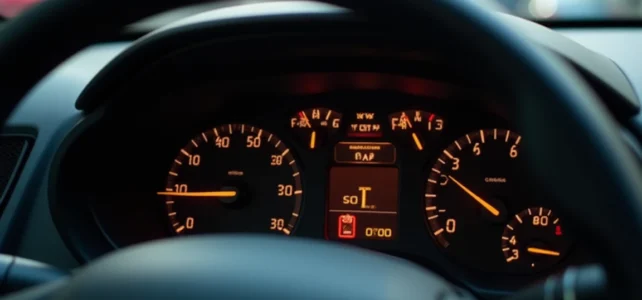
The orange wrench-shaped warning light on a Citroën C3 often generates disproportionate concern. On third-generation C3s (from 2016), Citroën classifies this indicator in the “service / maintenance” category in its official manuals. It is distinct from the engine warning light (pollution control) and does not necessarily indicate a breakdown. Understanding what this light actually measures, and what differentiates it from other orange alerts, allows for calibrating one’s reaction appropriately.
Service light or engine light: differences table on Citroën C3
The most common confusion among C3 drivers concerns the distinction between the wrench light and the orange engine light. These two indicators share the same color but refer to different systems.
Recommended read : Discover news and tips to better understand the world around you
| Criterion | Wrench light | Engine light (pollution control) |
|---|---|---|
| Shape | Wrench / flat key | Engine silhouette |
| Main function | Scheduled maintenance reminder or disabled function | Fault in the pollution control or injection system |
| Urgency | Check in the following days | Quick diagnostic recommended |
| Associated power loss | Rare | Possible (reduced mode) |
| Reset possible without mechanical intervention | Yes, after maintenance or via diagnostic tool | Requires reading and clearing the fault code |
The wrench light is most often activated when the mileage or the scheduled time for the next service is reached. On recent C3s, it can also react to a minor fault code related to the pollution control system, without the engine light coming on.
When you identify an orange wrench light on Citroën C3, the first step is to check if the engine light is also on. Both lights illuminated simultaneously point to a real mechanical or electronic fault, not just a calendar reminder.
Further reading : Everything You Need to Know About the Difference Between Oat Flour and Oat Flakes
Pollution fault codes and ECU update on recent C3s

Since the application of the Euro 6d-Final standard on city cars like the C3, workshops have observed a clear trend. The wrench light is increasingly triggered by fault codes related to pollution control (DPF, EGR valve, NOx sensor), without immediate loss of performance. The driver feels nothing abnormal, but the ECU has recorded an anomaly.
This phenomenon explains why so many owners of recent C3s find themselves perplexed by this light. The car drives normally, the engine does not stutter, and fuel consumption remains stable. The system has simply detected a deviation from the programmed emission thresholds.
Feedback from Citroën/PSA network workshops since 2023-2024 shows a little-reported fact in mainstream articles: a simple engine ECU update often permanently turns off the light in many cases, without the need for part replacement. These reprogramming efforts are linked to pollution compliance campaigns launched by the manufacturer.
Diagnosis via an OBD box allows for reading the exact fault code before heading to the workshop. However, clearing the code without understanding its origin amounts to temporarily masking the problem.
Most common faults associated with the wrench light
- Clogging of the particulate filter (DPF), especially on diesel engines primarily used in the city, where regeneration cycles do not complete
- Clogged or stuck EGR valve in the open position, generating a fault code without any perceptible symptoms while driving
- NOx sensor transmitting inconsistent values to the ECU after prolonged cold starts
- Oil change or service due date reached according to the vehicle’s internal counter
Resetting the wrench light: what works and what is useless
Disconnecting the battery to turn off the light is a common practice on forums. On a latest-generation C3, this method sometimes temporarily clears the warning, but the light reappears as soon as the ECU resumes its onboard diagnostics. The fault memory is not stored solely in volatile RAM.
After a service (oil change, filter replacements), the service light requires a manual reset. The procedure differs depending on the generations of C3.

Reset procedure after maintenance
- On C3 III (2016+): the reset is done through the dashboard menu or via the diagnostic tool in the workshop. The maintenance counter resets to zero once the operation is validated
- On C3 II (2009-2016): a combination of turning off the ignition, pressing the daily counter reset button, then turning on the ignition allows the countdown to restart
- On C3 I (2002-2009): the procedure is similar but the button is located on the instrument cluster, and the required press time varies by version
If the light persists after resetting and after a complete service, the problem is not calendar-related but linked to an active fault code. An OBD diagnostic becomes the only reliable option.
When the wrench light necessitates a visit to the workshop
The wrench light alone, without the engine light or power loss, generally allows for a few days before any intervention. The car remains usable for regular trips.
Three situations change this assessment. If the wrench light is accompanied by the engine light, a diagnostic should be done quickly. If there is a loss of power or entry into reduced mode, it is better to limit trips to the strict necessary. If the engine oil level is low and the light has come on simultaneously, an inspection under the hood is necessary before hitting the road again.
One last point deserves attention: on diesel C3s, ignoring a wrench light for several weeks can lead to advanced clogging of the DPF. The cost of late cleaning or replacement of the particulate filter far exceeds that of early diagnosis. Addressing the light in the days following its appearance remains the least costly strategy.