Have you ever seen those little white chips along a cut on a melamine panel? This fine and hard coating cracks when the blade passes if it is not suitable. The choice of circular saw blade for melamine depends on three specific technical parameters: tooth geometry, cutting angle, and the number of teeth relative to the diameter of the disc.
Negative cutting angle: the parameter that tooth geometry alone does not address
Most guides focus on the type of tooth geometry. This is a useful criterion, but it is not enough. The cutting angle of the tooth, that is to say its inclination relative to the radius of the disc, plays a crucial role in the cleanliness of the cut.
Further reading : How to Win the Game: Winning Strategies for Monopoly Go
A positive angle (the tooth tilts forward) bites into the panel aggressively. The cut is fast, but the melamine coating does not have time to be cut cleanly: it chips under pressure. A negative or near-zero cutting angle slows down penetration. The tooth scrapes the material instead of tearing it, which reduces chipping on the visible face.
Specifically, for melamine, choose a blade with a negative or zero angle. Manufacturers like Freud indicate this value on the packaging or the body of the blade. If the angle is not mentioned, it is often positive, thus poorly suited for melamine.
Read also : Luxury Jewelry Trends: How to Choose the Perfect Piece?
Before investing in a specialized disc, it is worth choosing a circular saw blade for melamine by first checking compatibility with your machine (diameter and bore).
Number of teeth and blade diameter: finding the right ratio
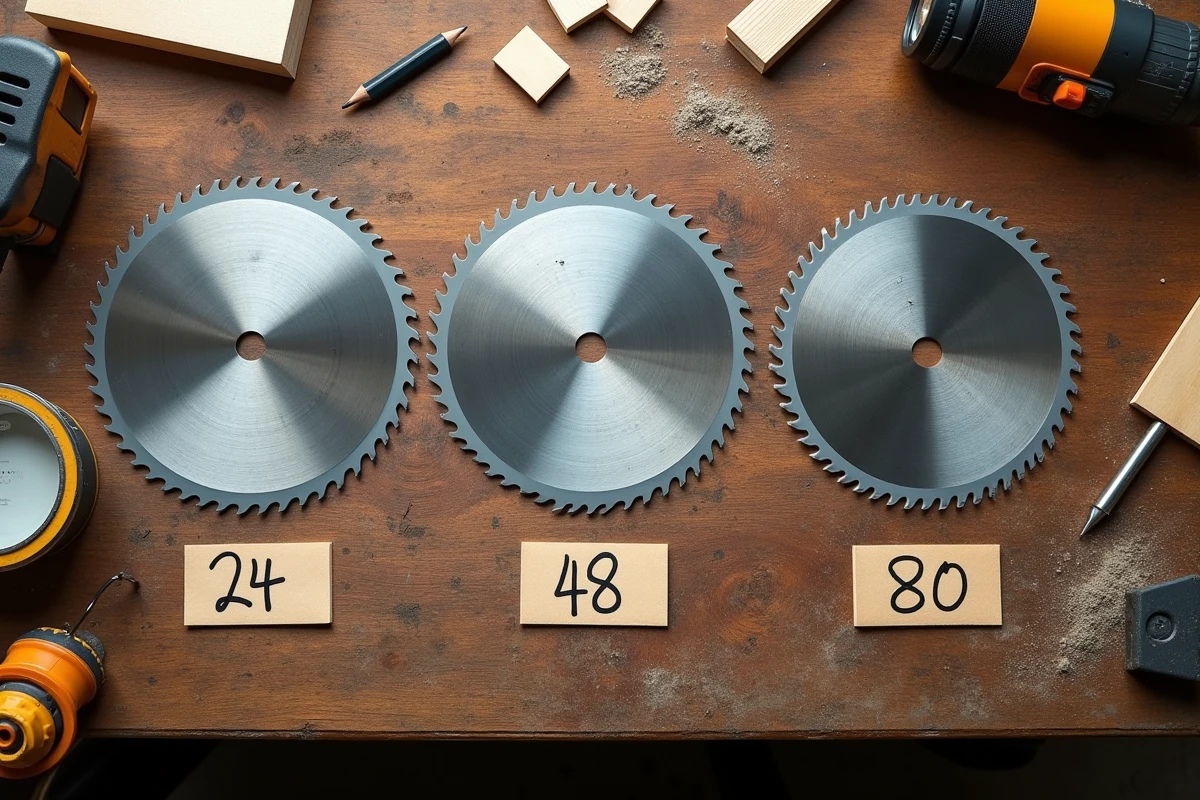
You may have read that you need “a lot of teeth” to cut melamine. This is true, but this advice remains vague without reference to the diameter of the blade.
Why the ratio matters more than the raw number
A large diameter blade with the same number of teeth as a smaller blade will have teeth that are more spaced out. The space between two teeth is called the pitch. The tighter the pitch, the finer and cleaner the cut.
For a melamine panel, the principle is simple: look for the highest number of teeth available for the diameter of your saw. On a common diameter of portable circular saws, a blade oriented for “finish” or “melamine” will offer a significantly higher number of teeth than a standard rip blade for solid wood.
The bore, a detail that can block everything
The bore is the central hole of the blade. If it does not match the axis of your machine, the blade will not fit. Some blades come with reducing rings, but always check compatibility before purchase. A wrong bore makes the blade unusable, regardless of its number of teeth.
Tungsten carbide teeth for melamine: ATB, Hi-ATB, or trapezoidal
Melamine is a particle board covered with a hard decorative sheet. This surface layer wears down the teeth quickly. Tungsten carbide teeth last much longer than standard steel.
Three tooth geometries stand out for this material:
- The ATB (alternating) tooth geometry tilts each tooth alternately left and right. It slices through the coating like a knife. This is the standard choice for clean cuts in melamine.
- The Hi-ATB tooth geometry pushes this alternation further with a more pronounced bevel angle. The Hi-ATB provides the cleanest cut on both faces of the panel. The downside: the teeth wear out faster.
- The flat trapezoidal tooth geometry (TCG) alternates a high trapezoidal tooth that removes material and a flat tooth that cleans the bottom of the cut. It lasts longer and is well-suited for repetitive cuts on site.
For occasional use in the workshop, the Hi-ATB geometry offers the best visual finish. For intensive use (kitchen installation, layout), the TCG represents a better compromise between longevity and cut quality.

Cutting settings and tips to limit chipping on melamine
Even the best blade will not compensate for poor settings or technique. A few simple gestures make a visible difference.
Adjusted cutting depth
Set the depth so that the blade barely protrudes beneath the panel. The less material the tooth passes through, the less it tears the coating at the exit. On a plunge saw, this setting is particularly precise.
Consistent feed speed
Pushing the panel too quickly against the blade (or advancing too quickly with a portable saw) increases the load per tooth. The coating breaks instead of being sliced. Maintain a steady feed, without forcing or hesitating.
Masking tape on the cut line
Applying wide masking tape on the cut line, on the visible side, reduces micro-chipping. The tape holds the fibers of the coating during the blade’s passage. This gesture takes a few seconds and significantly improves the result, especially with a blade that is starting to dull.
Panel orientation
On a portable circular saw, the blade turns from bottom to top: chips form on the upper face. Place the visible side of the melamine facing down. On a table saw, it is the opposite: the visible face goes up.
The choice of a blade suitable for melamine depends on the combination of three elements: a negative cutting angle, a high number of teeth for the diameter, and carbide teeth with ATB or TCG geometry. A good depth setting and controlled feed do the rest. Keep the masking tape handy; it is the cheapest anti-chipping assurance available.